
Cover New Detached ADU: The Diamond Bar Owner’s Guide
We stock and install Cover-compatible new detached ADU systems in Diamond Bar, with typical installed project ranges running $285,000-$420,000 all-in from permit set through final inspection. Most Cover units we coordinate ship within 8-14 weeks of permit approval, and we maintain active relationships with Cover’s logistics team to track production slots in real time. Homeowners usually discover something’s off when their Cover unit arrives with a damaged panel, a misaligned window assembly, or a utility connection point that doesn’t match their Diamond Bar site’s actual grade, each of which can stall a project by weeks if not caught early.
Which Cover Models This Applies To
Cover currently produces the Cover Backyard line in three base configurations: Studio (400 sq ft), One Bedroom (600 sq ft), and Two Bedroom (800 sq ft). Each ships with a specific panel system, window package, and MEP rough-in kit that must match your Diamond Bar lot’s zoning envelope. The model identifier lives on a metal tag inside the electrical panel door, format “CBY-YY-##” where YY is the year of manufacture and ## denotes the specific interior package.
The critical compatibility gotcha in Diamond Bar: Cover’s 2022-2023 production run used a 2-inch exterior wall panel with integrated conduit channels, while 2024+ units shifted to a 2.5-inch panel with external conduit routing. Ordering replacement panels or MEP extensions for the wrong generation means a 6-8 week re-manufacturing delay. We verify this against your original permit set before anything ships.
On OEM versus aftermarket: Cover’s panel system is proprietary, so structural and envelope components must come from Cover directly. For interior finishes, electrical fixtures, and plumbing trim, we specify equivalent or upgraded products from our standard vendors, documented in your permit set so the city inspector sees a complete, code-compliant package. The Haven Standard, Clause 3 requires this documentation; we don’t substitute without writing it down first.
Signs Your Cover New Detached ADU Is Failing
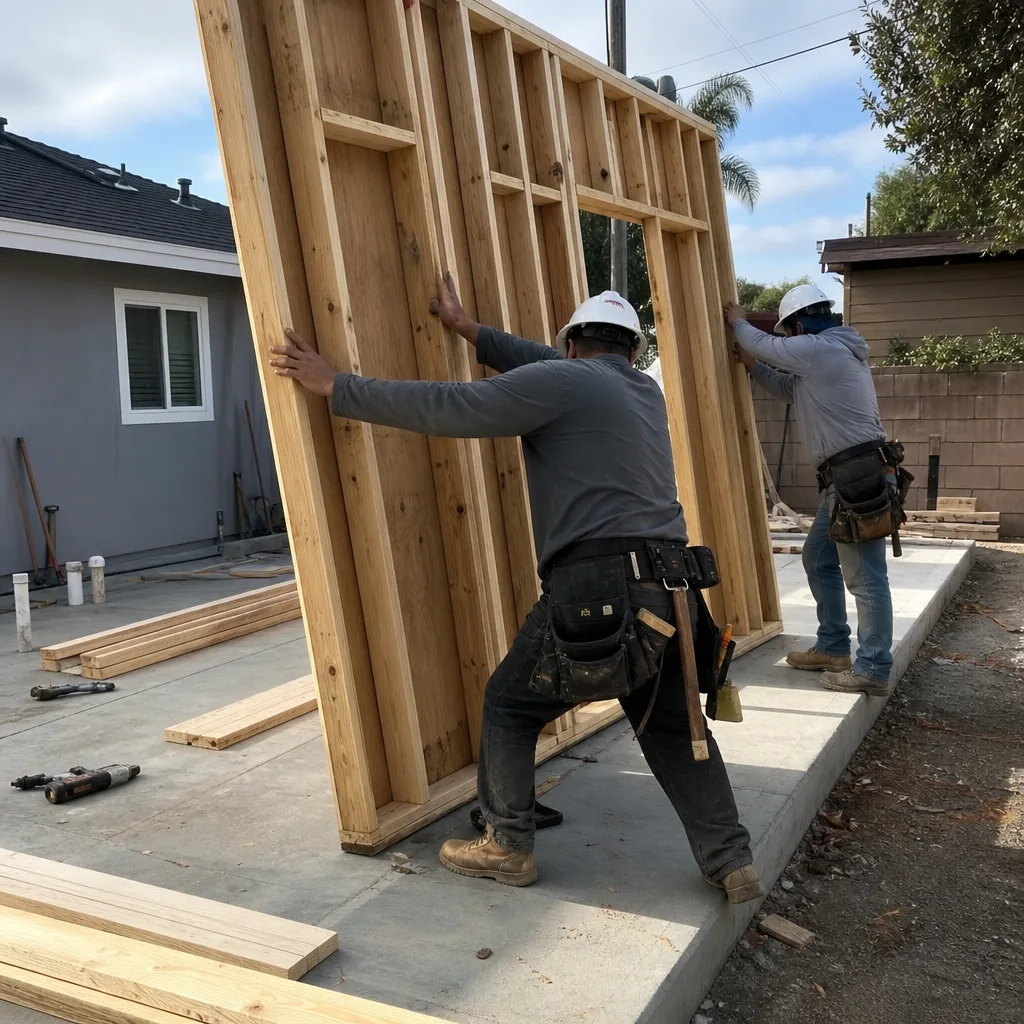
- Panel seam gaps widening after seasonal temperature swings. Diamond Bar’s 40-degree winter lows and 95-degree summer peaks cycle the steel frame differently than Cover’s Bay Area test conditions. Gaps exceeding 1/8 inch at panel joints indicate thermal movement stress that will eventually compromise the weather barrier.
- Window weep channels draining inward or staining interior drywall. Cover’s integrated window system relies on precise sill pan slope. If the unit settled unevenly on your Diamond Bar site’s expansive clay soil, water follows gravity the wrong direction. We see this most often in the Summitridge Park area where cut-and-fill grading is common.
- HVAC short-cycling or inability to maintain setpoint. Cover’s mini-split specification assumes specific envelope performance. A failed panel seal or compromised insulation batts, often from rough handling during crane placement, pushes the system beyond its design load.
- Electrical GFCI trips with no apparent load. Moisture intrusion at the exterior panel-to-foundation transition can wick into low-voltage conduit runs. This is a safety issue, not a nuisance, the moisture path creates a ground fault risk that standard breakers won’t catch.
- Foundation anchor bolts showing rust streaks or loosening. Diamond Bar’s occasional heavy winter rains, particularly December through February, expose any gap in the waterproofing at the steel skirt-to-slab interface. Left unaddressed, this transfers structural load unevenly and can void Cover’s warranty.
Replacement Cost & What’s Included
For Diamond Bar, Cover-compatible panel replacement runs $8,500-$14,000 per affected wall section, including removal of damaged panels, freight from Cover’s manufacturing facility, reinstallation, and sealant replacement. Window assembly swaps range $3,200-$5,800 depending on size and whether the integrated sill pan requires re-flashing. Foundation anchor and skirt repairs typically fall between $4,500 and $9,000, driven by how much of the waterproofing detail needs reconstruction.
What drives the range: freight timing (expedited versus standard), whether the original panel generation is still in production, and site access for crane or boom truck if panels must be lifted over existing structures. Every quote we write itemizes these separately, per Haven Standard Clause 1. No change orders once signed, that’s the promise in writing.
Workmanship warranty: 365-Day Done Right Promise on all installation labor. Cover’s own material warranty, typically 10 years structural and 2 years finishes, transfers directly to you as the original purchaser or subsequent owner.
DIY or Call Us?
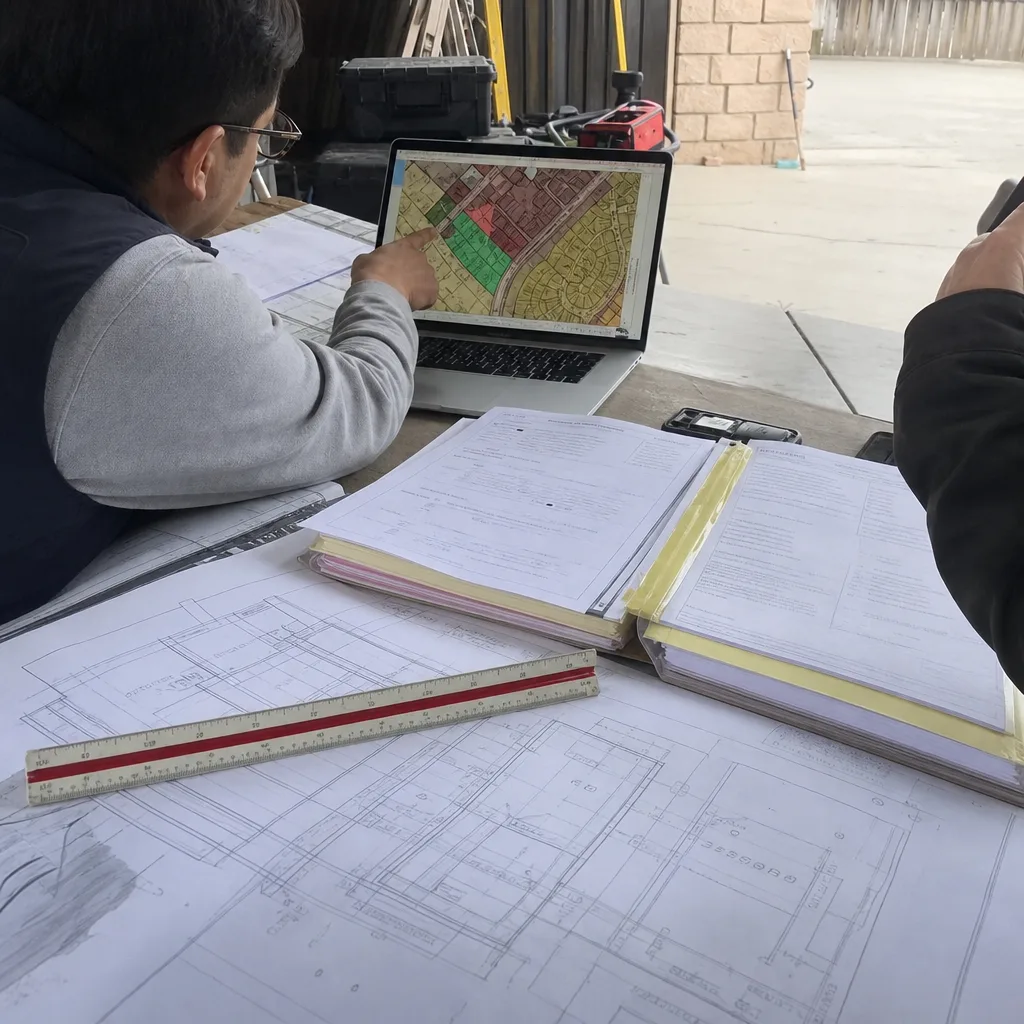
What you can safely check yourself: the model tag location, visual panel seam gaps with a flashlight, and whether GFCI trips correlate with rain events. Document with photos, timestamped, the city and any warranty claim will want this.
Where DIY goes wrong: Cover’s panels are structural, not cosmetic. Removing one without temporary bracing risks racking the frame. The integrated MEP channels carry live circuits and pressurized plumbing; opening them without lockout procedures is genuinely dangerous. And the waterproofing details at foundation level require specific sealant profiles and backer rod sizing that aren’t obvious from visual inspection.
We carry Cover-compatible panel inventory for emergency weather damage, though full replacements typically ship from Cover’s facility. Call (657) 239-4865 to schedule your free estimate, we’ll verify your model generation and inspect the specific failure before anything gets ordered.
FAQs
How long does a Cover new detached ADU last in Diamond Bar’s climate?
Cover warranties the steel frame for 10 years and the envelope system for 2 years, though with proper installation and maintenance, we expect 25-30 years of service life in Diamond Bar’s mild, dry climate. The key variable is the foundation detail, expansive clay soils in the Golden Springs and Summitridge areas accelerate settlement stress if the waterproofing skirt isn’t maintained. Call (657) 239-4865 for an exact condition assessment, estimates are free.
Can a damaged Cover panel be repaired instead of replaced?
Cosmetic dents in non-structural interior panels can sometimes be filled and refinished, but any compromise to the exterior weather barrier, insulation cavity, or structural face requires full panel replacement. Cover’s warranty explicitly excludes patched panels from future claims. We document the damage with photos and quote both options when repair is technically possible, though replacement is usually the sounder long-term choice.
How long does a full panel swap take once parts arrive?
Typical panel replacement on a Cover unit requires 3-5 working days: one day for temporary weather protection and bracing, one day for removal and installation, and 1-2 days for sealant cure and MEP reconnection before final testing. Delays happen when the panel generation has changed and rough-in points don’t align, which is why we verify against your original permit set before ordering. Call (657) 239-4865 to schedule, and we’ll confirm your specific timeline in writing.
Do you stock Cover parts locally?
We maintain emergency panel inventory for weather damage scenarios, but standard replacement panels ship from Cover’s manufacturing facility with 6-10 week lead times for current-generation units, longer for discontinued series. Our value is in the coordination, we track production slots, manage freight logistics, and hold the single contract so you’re not chasing Cover’s customer service while your slab sits exposed. The paperwork should answer the question before you think to ask it.
Written by Nadia Ellery, Owner & Principal Designer, Ellery ADU Studio Diamond Bar at Ellery ADU Studio Diamond Bar, serving Diamond Bar and nearby areas.