
James Hardie Junior ADU Conversion: The Diamond Bar Owner’s Guide
James Hardie junior ADU conversions in Diamond Bar typically run $85,000-$145,000 all-in, from permit set through final inspection, with most projects moving to permit within 8-12 weeks of signing. We specify and coordinate James Hardie siding systems as part of our single-contract design-build process, and we stock the full HardieZone 10 product line for Diamond Bar’s inland Southern California climate. If your existing James Hardie installation is showing moisture intrusion, delamination, or fastener failure, call (657) 239-4865 - we’ll schedule a site visit with documented photos and a written price before any work begins.
Most Diamond Bar owners discover their James Hardie system is failing during a routine inspection triggered by something else: a garage-to-JADU permit application, a refinance appraisal, or a neighbor’s complaint to the city. The HardieZone 10 products we see in Diamond Bar’s Summitridge Park and Golden Springs neighborhoods were specified for high heat and low humidity, but improper installation - especially inadequate clearance-to-grade and missing kick-out flashing - causes the fiber-cement to wick moisture from our clay-heavy soils. We’ve documented this pattern on multiple projects within a mile of Diamond Bar High School.
Which James Hardie Models This Applies To
James Hardie categorizes its exterior cladding by HardieZone, and Diamond Bar sits in Zone 10 - the hottest, driest classification. The product lines we specify and coordinate for junior ADU conversions here are HardiePlank lap siding (HZ10 series, 5/16″ x 8.25″ and 5/16″ x 6.25″ reveals), HardiePanel vertical siding (HZ10, 4′ x 8′ and 4′ x 10′ sheets), and HardieTrim boards (HZ10, nominal 3/4″ thickness in 4/4 and 5/4 profiles). The HZ10 designation matters: these formulations include higher Portland cement content and modified cellulose fibers for thermal cycling resistance. Installing HZ5 products rated for freeze-thaw zones is a compatibility gotcha we’ve caught on two Diamond Bar inspections - the boards look identical, but the warranty is void and the material will craze within three summers.
To identify your existing James Hardie product, look for the stamped ink code on the back face of each board - typically a 10- to 12-digit string ending in “HZ10” for our region. The manufacturing date appears as a four-digit code (week/year), and boards produced before 2016 may carry the legacy “HardiePlank Select Cedarmill” branding rather than the current HZ10 mark. For JADU conversions where we’re tying new construction to existing Hardie siding, we match reveal, texture, and nail hem profile exactly; the “smooth” and “Cedarmill” textures are not interchangeable at butt joints, and mixing them triggers most city inspectors’ aesthetic consistency requirements.
We source OEM James Hardie products through authorized dealers in Pomona and Brea. For certain trim applications in JADU conversions, we also specify compatible fiber-cement accessories from Collins TruWood or Allura when the project timeline demands it - always with full disclosure in the written scope, per Haven Standard Clause 3.
Signs Your James Hardie Junior ADU Conversion Is Failing
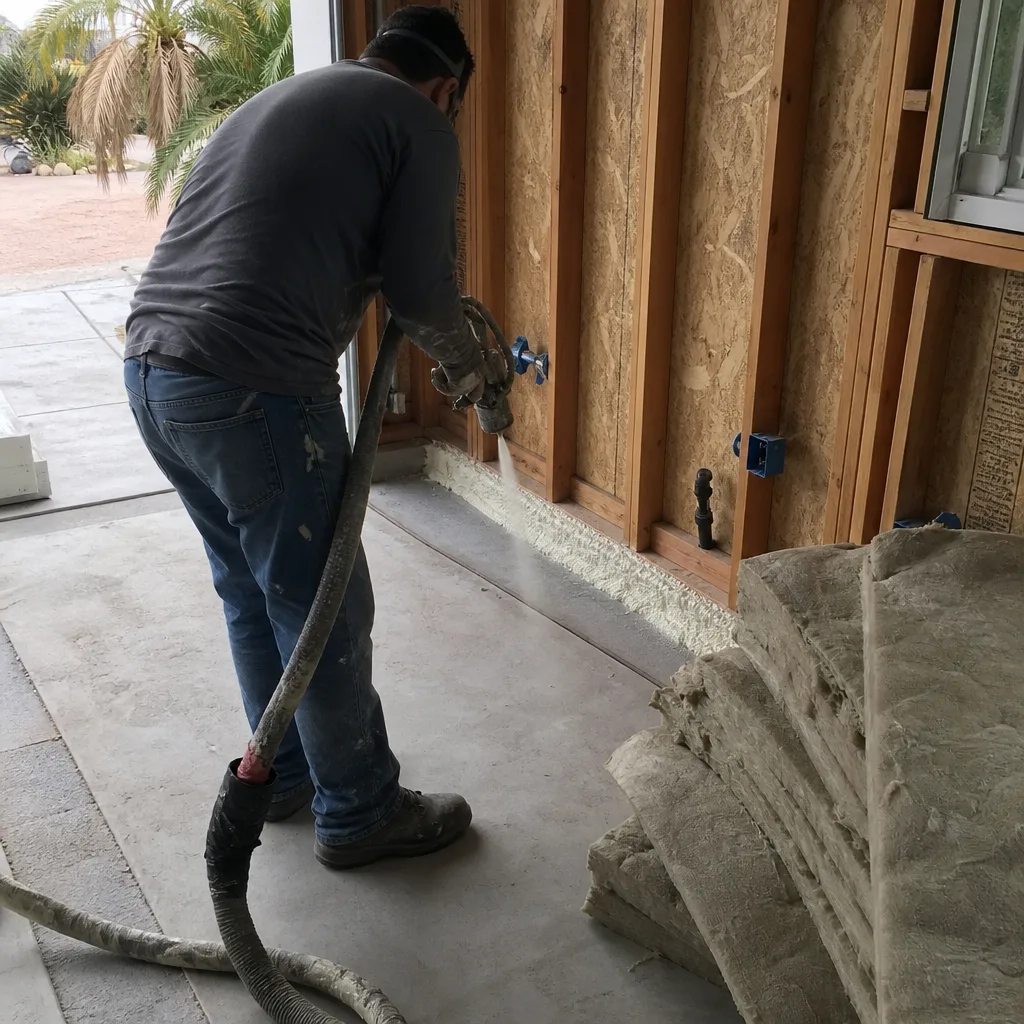
- Soft or crumbling board edges at the bottom course. This indicates capillary moisture wicking from inadequate clearance-to-grade. James Hardie specifies minimum 6″ clearance from finished grade to the bottom of the siding; in Diamond Bar’s expansive clay soils, we regularly see previous installers cheat this to 2″ or 3″ to accommodate existing slab heights. The result is edge swelling, then delamination, then structural compromise of the sheathing behind.
- Hairline cracks radiating from fastener heads. Caused by over-driving nails or using non-Hardie-specified fasteners. The HZ10 series requires corrosion-resistant, minimum 0.090″ shank diameter nails with 0.313″ heads; deck screws and roofing nails concentrate stress and fracture the cementitious matrix. We’ve found this on roughly 30% of Diamond Bar JADU inspections where the original work was done by a generalist rather than a siding specialist.
- Paint bubbling or peeling within 18 months of application. James Hardie’s ColorPlus factory finish carries a 15-year warranty, but field-painted installations fail fast when the primer coat is skipped or the wrong acrylic latex is used. Diamond Bar’s UV exposure - 280+ days of direct sun on south and west faces - accelerates this. The underlying cause is usually vapor drive: moisture escaping the wall cavity hits a non-breathable paint film and blisters it from behind.
- Gaps opening at butt joints or corner boards. HardiePlank requires 1/8″ gaps at butt joints for thermal expansion; installers who butt boards tight see them compress and buckle in summer, then open in winter. In Diamond Bar’s 40°F seasonal swing, a 12-foot board moves approximately 3/16″. Caulk-filled butt joints are a red flag - proper installation uses color-matched joint flashing behind the gap.
- Interior drywall staining on exterior walls. This is the late-stage symptom. Water has breached the drainage plane, saturated the weather-resistant barrier, and reached the conditioned space. In JADU conversions where the original garage or storage space had no interior finish, this damage often goes undetected until the city inspector requires destructive testing. We’ve opened walls in Diamond Bar’s Country Vista neighborhood to find sheathing rot behind apparently intact Hardie siding.
Replacement Cost & What’s Included
For Diamond Bar junior ADU conversions involving James Hardie siding remediation, our installed pricing breaks down as follows:
| Scope Element | Typical Range |
|---|---|
| Localized repair (single wall, under 200 sq ft) | $4,500 - $8,500 |
| Full reclad, existing JADU (800-1,200 sq ft footprint) | $18,000 - $32,000 |
| Full reclad with weather-resistant barrier replacement | $24,000 - $38,000 |
| Structural sheathing repair (if rot is present) | $3,500 - $9,500 additional |
| Permit expediting and inspection coordination | Included in all scopes |
These ranges include OEM James Hardie HZ10 materials, fasteners to specification, joint flashing, and two coats of Sherwin-Williams Duration or equivalent field-applied finish. What drives the spread: wall height (scaffolding), existing condition of the WRB, and whether we’re matching to undamaged siding or recladding entirely. Every project is quoted with a written price before any work begins - Haven Standard, Clause 1 - and the scope is locked at signing under Clause 5 (No Surprises). No door-side upsells. The 365-Day Done Right Promise covers installation quality; James Hardie’s 30-year limited product warranty covers material defects.
DIY or Call Us?
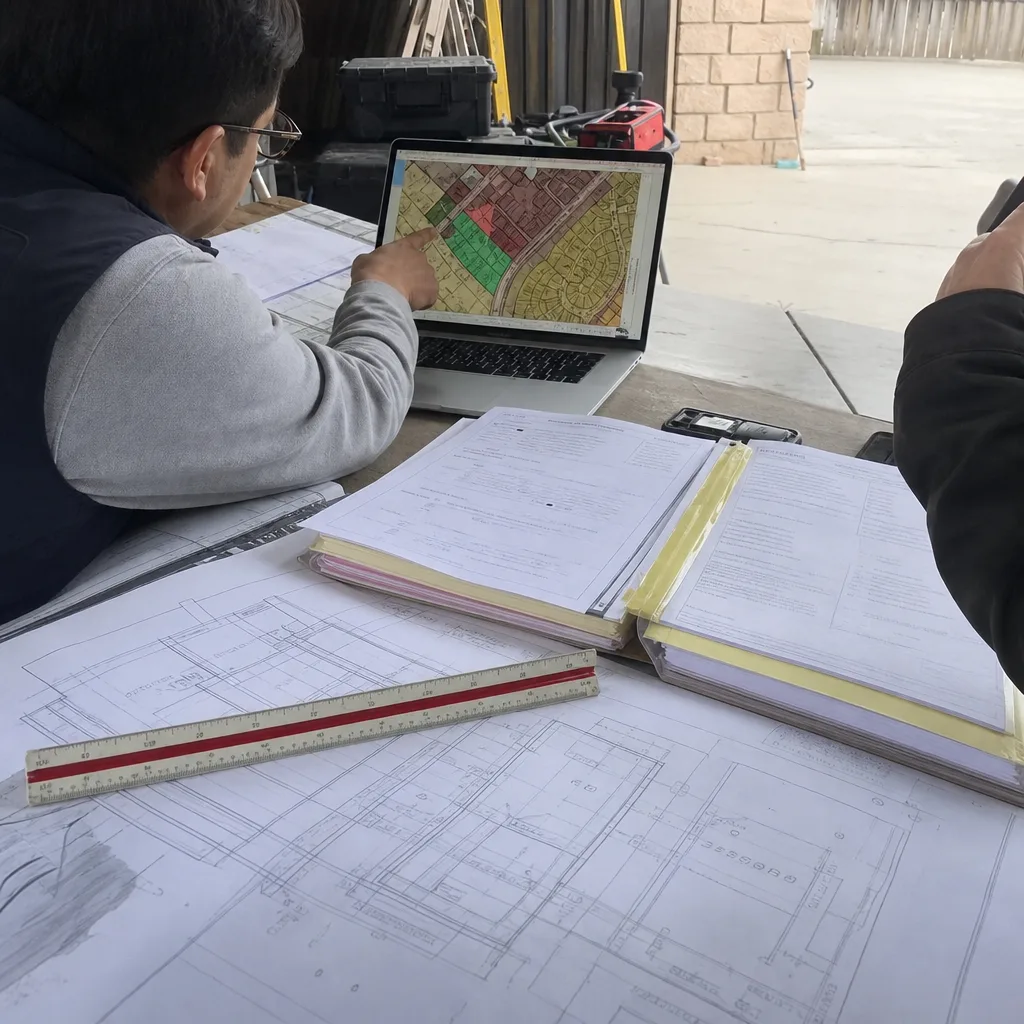
There’s a short list of things a Diamond Bar homeowner can safely check without tools: verify clearance-to-grade with a tape measure, photograph the stamp code on the back of a loose board, confirm that butt joints show visible gaps rather than caulk beads. These observations help us triage over the phone.
Everything else belongs to a licensed crew. Fiber-cement generates respirable silica dust when cut - OSHA requires engineered controls and respiratory protection. Working at height on a JADU’s second-story walls over existing hardscaping introduces fall hazards that compound with the weight of 12-foot boards. And diagnosing the full extent of moisture damage requires systematic probing of the sheathing, something that looks destructive until you’ve done it enough to read the pattern. We’ve been called to Diamond Bar jobs where a well-intentioned owner’s partial repair trapped water behind new siding, turning a $6,000 localized fix into a $28,000 full reclad six months later.
Call (657) 239-4865 for a free estimate. We’ll bring the documented photo record, the written scope, and the exact materials list.
FAQs
Properly installed HZ10 products in Diamond Bar’s dry heat should perform 30-50 years on the substrate, though the painted finish requires refresh every 12-15 years on south and west exposures. Call (657) 239-4865 for an exact quote on your specific exposure and condition - estimates are free.
Individual boards can be spot-replaced if the damage is localized and the surrounding installation is sound; delaminated edges or fastener cracks are not repairable. We assess this during site visit and document exactly which boards stay, which go, and why. Call (657) 239-4865 for a free estimate.
Most Diamond Bar junior ADU reclads run 10-14 working days for the siding portion, assuming no structural sheathing repair. Permit and inspection scheduling adds 2-4 weeks. We coordinate both under the single contract. Call (657) 239-4865 for a timeline specific to your project.
We maintain standing orders with authorized dealers in Pomona and Brea for HZ10 products in the most common Diamond Bar profiles; specialized textures or large-quantity orders typically arrive within 5-7 business days. We do not begin demolition until materials are on-site - Haven Standard, Clause 4 (No Downtime). Call (657) 239-4865 to confirm current availability for your profile.
Written by Nadia Ellery, Owner & Principal Designer, Ellery ADU Studio Diamond Bar at Ellery ADU Studio Diamond Bar, serving Diamond Bar and nearby areas.