
James Hardie Site Prep & Utilities: The Diamond Bar Owner’s Guide
James Hardie site prep and utilities installation in Diamond Bar typically runs $8,500-$14,200 for a standard ADU pad, with utility tie-ins priced separately based on distance from the main. We stock James Hardie-compatible moisture barriers, flashing systems, and substructure hardware, and most Diamond Bar clients have their spec confirmed same day. Most owners discover a prep or utilities failure when their general contractor’s bid suddenly balloons, or when a city inspector flags inadequate drainage slope or missing fire-rated separation between the new ADU and existing structure.
Which James Hardie Models This Applies To
James Hardie doesn’t manufacture site prep or utilities components directly. Instead, the brand specifies third-party systems that must meet their warranty conditions. For Diamond Bar’s climate zone, that means moisture management rated for 110°F summer peaks and occasional winter frost, plus fire-resistant underlayment that satisfies LA County’s Chapter 49 requirements.
We see three specification tiers in the field. The base tier uses standard 6-mil polyethylene vapor barrier with galvanized steel flashing. The mid-tier upgrades to 10-mil reinforced barrier and copper flashing at critical junctions. The full Hardie-spec tier requires fluid-applied waterproofing membrane at all penetrations, plus engineered drainage mat rated for 11 inches per hour rainfall, which Diamond Bar hit during the January 2023 storms.
Identifying your tier means checking the stamped submittal sheet from your original permit set. Look for the “Site Prep & Utilities” page, usually sheet A-3 or A-4. The spec line will read either “per manufacturer” (lowest tier, often problematic), “HardieZone 10 compliant” (mid), or “Hardie-spec full system with fluid membrane” (top). Nadia Ellery and our team have reviewed enough Diamond Bar permit sets to spot the gaps fast. If your set says “per manufacturer” and your contractor is gone, you’re likely looking at a retrofit.
OEM-spec materials cost roughly 40% more than box-store equivalents, but Hardie’s 30-year finish warranty requires them. We source through authorized distributors in Pomona and City of Industry, not big-box channels, and we document batch numbers on every delivery photo.
Signs Your James Hardie Site Prep & Utilities Is Failing
- Water staining on interior walls below window height. This usually means the drainage plane behind your Hardie siding has a breach. In Diamond Bar’s clay-heavy soils, hydrostatic pressure pushes water through gaps in the moisture barrier. The fix isn’t the siding, it’s the prep layer behind it.
- Efflorescence on foundation walls. White powdery deposits signal vapor drive through an inadequate or torn barrier. We see this most in Diamond Bar’s older Summit Ranch builds where original 4-mil barrier has degraded after 15-20 years of thermal cycling.
- Siding panels pulling away from trim at corners. Hardie’s fiber-cement expands and contracts with moisture. If the underlying prep didn’t include proper expansion gaps per Hardie’s 3/16-inch specification, the panels buckle. This reads as a siding problem but starts with prep.
- Musty smell in ADU crawlspace or utility room. In Diamond Bar’s variable humidity, a missing or punctured vapor barrier lets soil moisture rise through the slab. The odor arrives before visible mold. Our documented photo record catches this during pre-work inspection.
- Utility trench settlement or pooling. If your electrical or plumbing trench wasn’t backfilled with engineered compacted fill, Diamond Bar’s winter rains create voids. We’ve found 8-inch drops over conduit runs in homes near Golden Springs Drive where original backfill was native soil.
Replacement Cost & What’s Included
For Diamond Bar properties, Hardie-spec site prep and utilities work breaks down as follows:
| Component | Typical Range |
|---|---|
| Vapor barrier replacement (per sq ft of footprint) | $2.80-$4.50 |
| Fluid-applied membrane at penetrations | $650-$1,100 |
| Drainage mat installation | $3.20-$5.10 per sq ft |
| Utility trench with engineered backfill | $85-$140 per linear foot |
| Fire-rated separation wall (garage conversions) | $2,400-$4,200 |
| Permit amendment or correction | $800-$1,600 |
These are installed prices, materials and labor combined, per Haven Standard Clause 1. The range reflects access difficulty, existing damage extent, and whether we’re correcting someone else’s work. A full ADU pad prep with utilities typically lands at $8,500-$14,200. We lock the number at signing. No change orders for conditions we could reasonably have seen.
Our 365-Day Done Right Promise covers the prep work specifically. If moisture testing fails within a year, we reopen, diagnose, and correct at our cost. The paperwork should answer the question before you think to ask it.
DIY or Call Us?
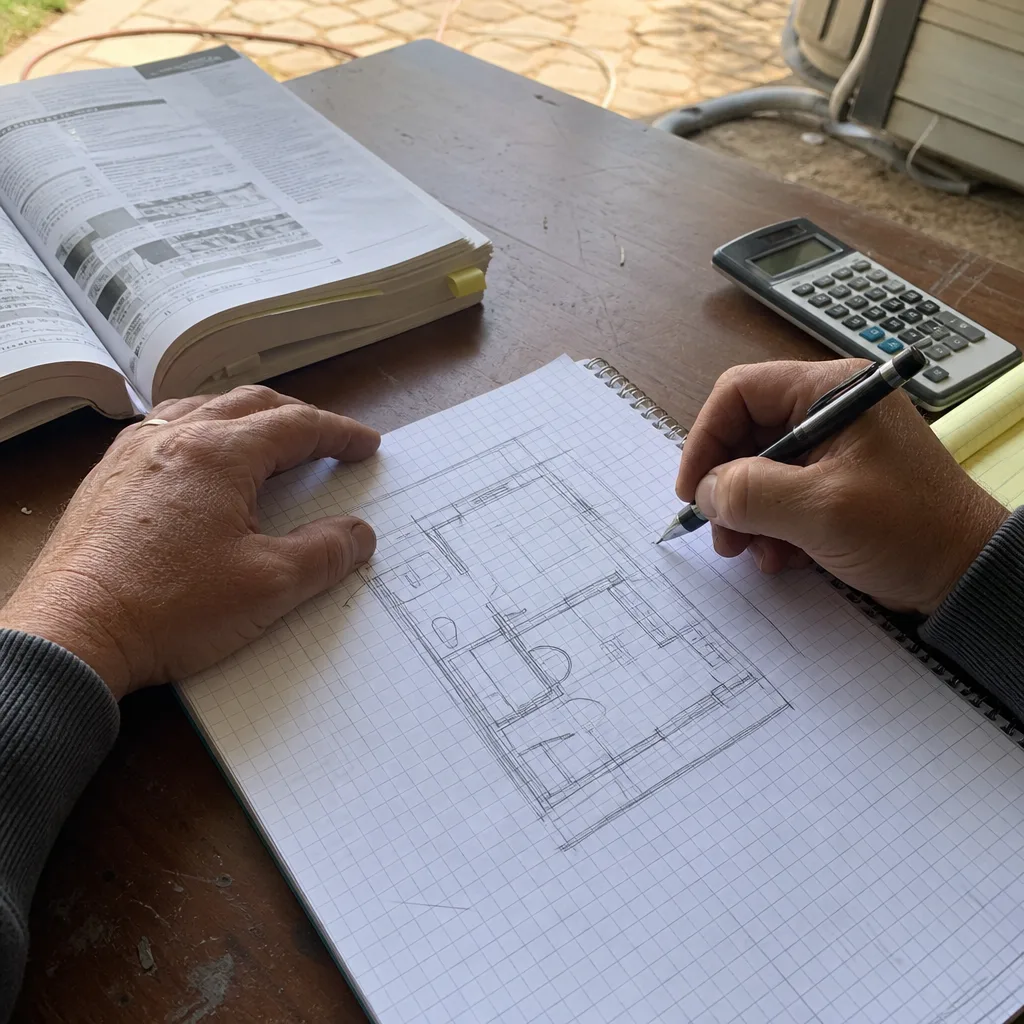
There’s a safe middle ground here. An owner can verify their permit set spec, photograph existing conditions, and check for obvious barrier tears or pooling. That documentation helps any professional you eventually hire.
Where DIY goes wrong: fluid-applied membrane requires specific mil thickness and cure conditions. Too thin, and Hardie voids your siding warranty. Too thick, and it cracks in Diamond Bar’s heat. Utility trench backfill must hit 95% compaction per LA County standard, verified with a nuclear density gauge. Most rental plate compactors won’t get there. And any electrical or gas utility work requires licensed trades, period.
We’re also fluent in prefab and modular coordination, including Abodu, Cover, and Dvele systems that specify their own prep requirements alongside or instead of Hardie’s. Same single contract. Same written price upfront.
Call (657) 239-4865 to schedule your free estimate. We’ll review your permit set, photograph existing conditions, and return a line-item scope with no obligation.
FAQs
Properly installed, expect 25-30 years for the full system. The 10-mil reinforced barrier degrades fastest, typically showing wear at year 18-22 in Diamond Bar’s UV-plus-heat cycles. Fluid-applied membrane lasts longer but needs inspection after any seismic event. Call (657) 239-4865 and we’ll check your installation year against material batch records.
Localized repair is possible if damage is limited to one wall plane and the original spec was mid-tier or above. We cut back, tie in new barrier with manufacturer-approved tape, and test with a spray rack. If the original was 4-mil poly or shows widespread failure, full replacement is the only warranty-compliant path. We document both options in writing before you decide.
Three to five working days for a standard ADU footprint, assuming no utility relocation. Add two days if we need to coordinate with SCE or Golden State Water for service drops. Permitting for corrections runs parallel, typically 10-14 business days in Diamond Bar’s current queue. We handle that submittal.
We stock 10-mil reinforced barrier, copper and galvanized flashing profiles, and drainage mat in standard widths. Fluid-applied membrane is mixed to order from Pomona distributors, 48-hour lead time. For Diamond Bar projects, we pre-order once the permit set is confirmed so material arrives before crew mobilization.
Written by Nadia Ellery, Owner & Principal Designer, Ellery ADU Studio Diamond Bar at Ellery ADU Studio Diamond Bar, serving Diamond Bar and nearby areas.