
Last updated September 25, 2026
ADU Cost Breakdown: The Diamond Bar Homeowner’s Reference for 2026
The difference between a $200,000 and a $380,000 ADU in Diamond Bar is rarely the square footage. In our experience across 900-plus projects, it’s whether the lot required a retaining wall, whether the utility connection needed trenching under a driveway, and whether the permit set had to be revised twice. This guide breaks costs into the six categories that actually drive variance - site conditions, unit type, permit fees, design fees, utility connections, and finish level - and assigns Diamond Bar-specific dollar ranges to each. You’ll finish with a number you can defend to a lender, not a range wide enough to be useless.
Quick Answer
A complete ADU in Diamond Bar in 2026 typically costs between $120,000 and $380,000 all-in, depending on unit type, site conditions, and finish level. Garage conversions sit at the low end of this range, while new detached units with hillside sitework and mid-market finishes reach the top. Every project we quote at Ellery ADU Studio Diamond Bar home receives a written, line-item price before any work begins - per Haven Standard, Clause 1.
Table of Contents
- Site Conditions: The Hidden Cost Driver
- Unit Type Cost Matrix
- Permit and Design Fees
- Utility Connections
- Finish Level Delta
- Financing Cost as a Project Line Item
- Common Mistakes to Avoid
- When to Call a Professional
- Frequently Asked Questions
Site Conditions: The Hidden Cost Driver
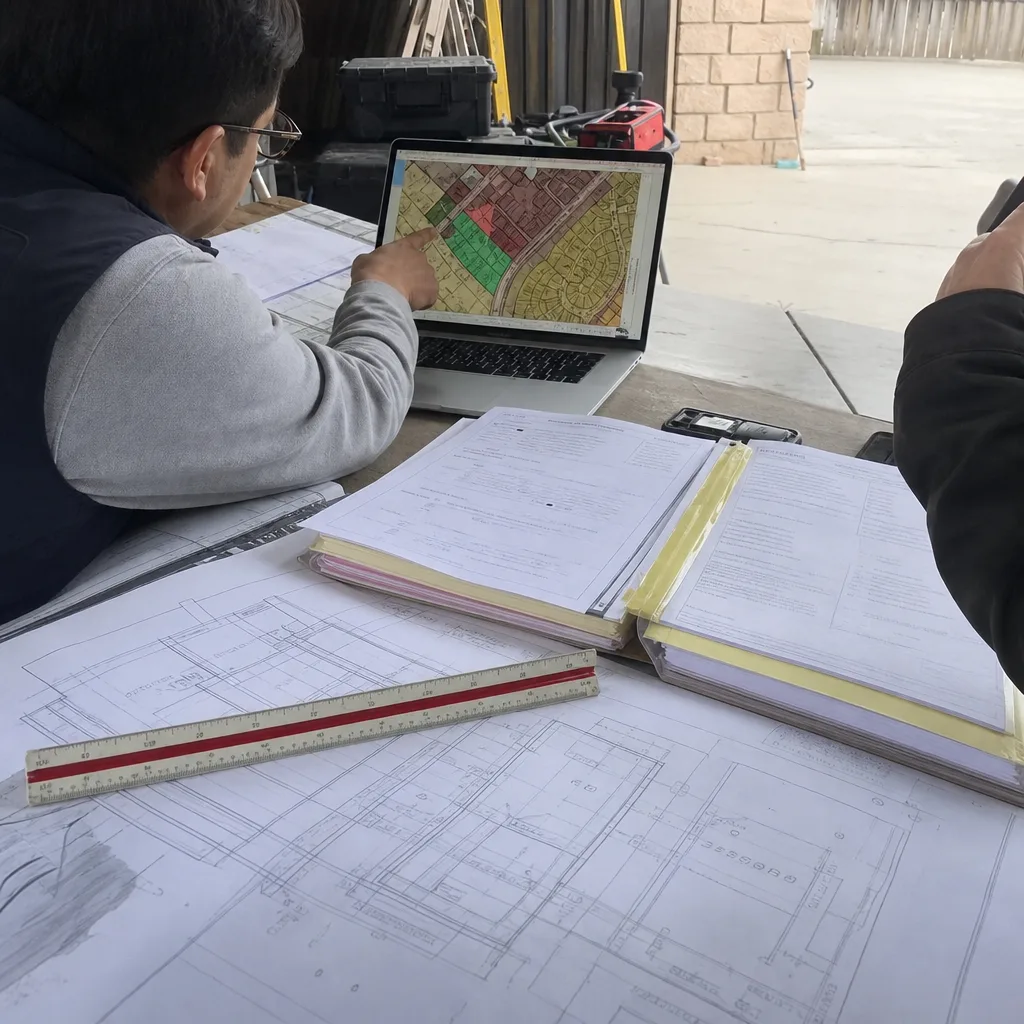
Diamond Bar’s terrain is the single biggest variable most cost guides ignore. The city sits at the junction of the Pomona and San Jose Hills, with slope percentages ranging from flat valley floor to 30-plus percent on the northern and eastern ridges. That slope percentage determines whether you’re pouring a simple slab or building a $45,000 retaining wall system.
Here’s how site conditions break down in our Diamond Bar projects:
- Flat lots (0-5% slope): Minimal grading, standard foundation. Site prep typically adds $8,000-$15,000 to the base unit cost.
- Moderate slope (5-15%): Cut-and-fill grading, possible stepped foundation. Range: $15,000-$28,000.
- Steep hillside (15%+): Engineered retaining wall, soils report, drainage plan, and often a grading permit from LA County. Range: $28,000-$45,000.
The soils report is where many Diamond Bar homeowners get surprised. The city’s eastern sections overlay the Puente Formation, a sedimentary layer with variable bearing capacity. If the geotechnical engineer finds expansive clay or insufficient bearing pressure, the foundation design shifts from standard spread footings to drilled piers or mat slabs. We’ve seen this add $12,000-$18,000 on a 500-square-foot unit.
Drainage is the other sleeper cost. Diamond Bar’s 2024 storm season exposed how many older lots were graded without modern retention requirements. If your ADU displaces permeable surface area, LA County may require a bioswale, dry well, or underground detention system. Budget $4,000-$12,000 for this, depending on the required volume and whether the work triggers a separate drainage plan review.
Tree protection zones matter too. The city’s oak tree ordinance requires a 1-foot protection radius per inch of trunk diameter for native oaks. If your planned ADU footprint conflicts with a protected tree, you’re looking at redesign, root barrier installation, or arborist-monitoring fees - typically $2,500-$6,000.
Our documented photo record captures every site condition we find during initial survey. Clients receive evidence of slope measurement, soil exposure, and drainage patterns - not a summary of how it looked to us.
Unit Type Cost Matrix
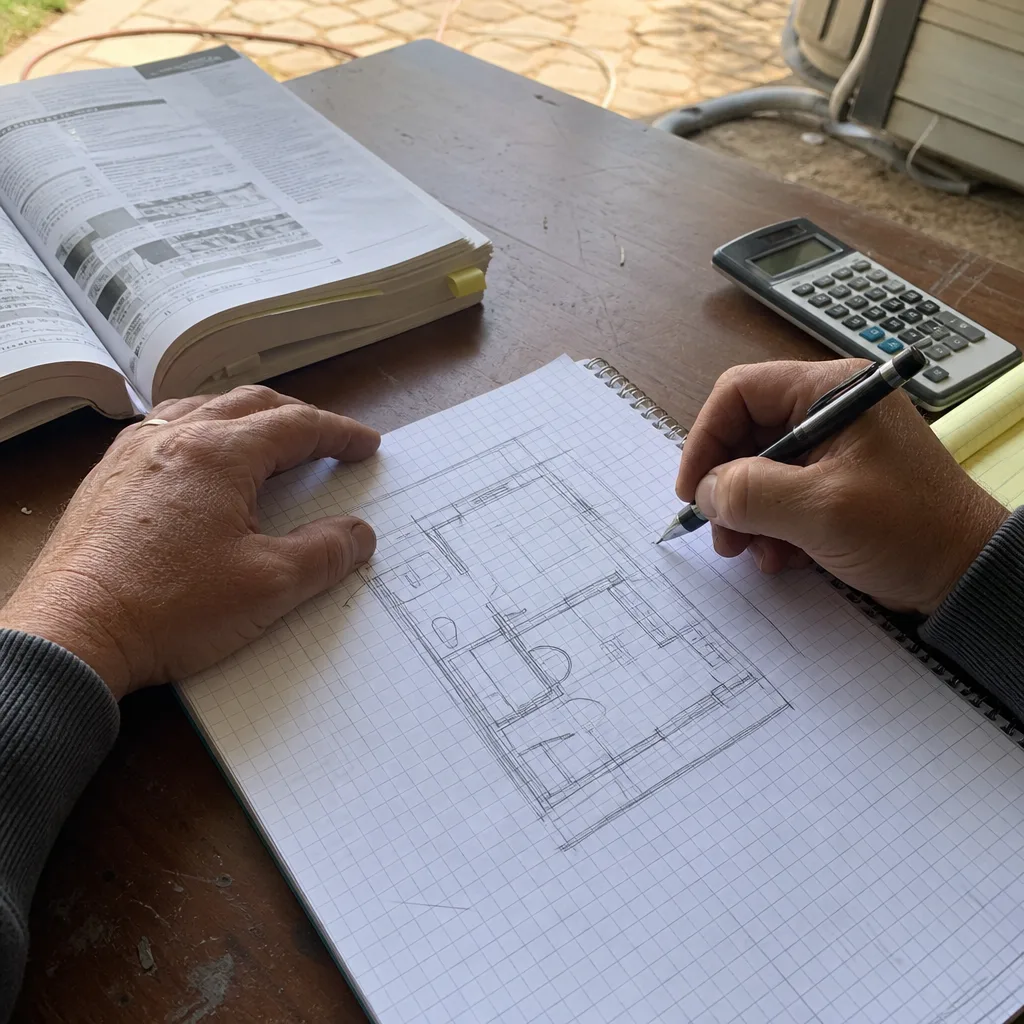
The unit type you choose sets your cost floor and ceiling before any site work is priced. These ranges reflect our 2026 pricing for Diamond Bar projects, inclusive of design, permitting, construction, and standard finish - but exclusive of site conditions and utility work discussed in later sections.
| Unit Type | Square Footage | All-In Cost Range | Scope Assumptions |
|---|---|---|---|
| Junior ADU (JADU) | 150-500 sf | $60,000-$95,000 | Interior conversion within existing home; shared utilities; no separate meter; minimal structural work |
| Garage Conversion ADU | 240-400 sf | $120,000-$185,000 | Existing slab and walls retained; upgraded to residential code; new electrical subpanel; mini-split HVAC |
| Attached Addition ADU | 400-800 sf | $200,000-$310,000 | New construction tied to primary residence; shared wall; full kitchen and bath; tied into existing utilities |
| New Detached ADU | 400-1,200 sf | $280,000-$380,000 | Standalone structure; full utility connections; independent foundation; complete mechanical systems |
The garage conversion is Diamond Bar’s sweet spot for cost efficiency, but only when the existing structure is viable. We evaluate three things before quoting: slab thickness (4-inch minimum for residential, many older garages have 3.5-inch), wall framing (2×4 at 16 inches on center is the threshold for insulation and shear capacity), and roof structure (trusses engineered for residential live load, not just storage). If any of these fail, the “conversion” becomes a near-total rebuild, and the price migrates toward the attached-addition range.
For new detached units, the prefab and modular route can compress the construction timeline but rarely reduces the all-in cost below $260,000 in Diamond Bar. The reason: freight, crane, and set costs for brands like Plant Prefab or Abodu run $15,000-$35,000 depending on access, and the foundation and utility work remain identical to site-built. Where prefab helps is schedule certainty. A Plant Prefab unit arrives 80 percent complete; the remaining 20 percent (foundation, utility tie-in, finish) takes 6-10 weeks versus 16-24 weeks for full site-built.
We’ve also specified Tuff Shed structures for clients who want a studio or office ADU without full kitchen facilities. These run $45,000-$75,000 installed with electrical and insulation, but they’re classified as accessory structures, not ADUs, if they lack cooking facilities. The distinction matters for permitting and resale.
Every unit type we quote - whether Garage Conversion ADU in Diamond Bar or New Detached ADU in Diamond Bar - carries the same written-price guarantee. Haven Standard, Clause 1.
Permit and Design Fees
Permit and design fees are where the designer-versus-contractor blame gap costs homeowners real money. When design and construction are separate contracts, the designer blames the builder for “value engineering” that violates the permit set; the builder blames the designer for drawings that don’t reflect field conditions. The homeowner pays for the revision cycle.
Our ADU Design & Permitting in Diamond Bar is integrated with construction under one contract at one written price. Here’s how the fee structure breaks down:
LA County Building Permit Fees
- Plan check fee: approximately 65% of the building permit fee, due at submittal
- Building permit fee: based on valuation, roughly $8-$12 per $1,000 of construction value for residential
- For a $250,000 ADU: plan check ~$1,625, permit ~$2,500, total ~$4,125
- Additional county fees: sewer connection permit ($800-$1,200), electrical permit ($400-$800), plumbing permit ($300-$600)
School Fees
Education Code §17620 requires school facility fees on new residential construction. LA County’s current rate is $4.08 per square foot. A 600-square-foot ADU adds $2,448. Garage conversions are exempt if the garage was existing. JADUs are exempt. New detached and attached units pay full rate.
Design-Build Fee Structure
Our design and permitting fee is typically 8-12% of construction cost, embedded in the single written price. For context, separate architects in the Diamond Bar market charge $8,000-$18,000 for an ADU permit set, plus structural engineering ($3,000-$6,000), plus Title 24 energy calculations ($800-$1,500), plus revisions at $150-$250 per hour when the city requests changes. We’ve seen homeowners spend $18,000 on design only to learn their contractor won’t build from those drawings without a separate construction set.
The permit timeline in Diamond Bar runs 8-14 weeks for initial plan check, depending on LA County’s queue. Revisions add 3-6 weeks per cycle. Our permit set includes the structural calculations, energy compliance documentation, and landscape plan (if triggered) upfront - the documentation that prevents revision cycles. Under Haven Standard, Clause 5 (No Surprises), the scope is locked at signing; no door-side upsells, no scope creep.
Utility Connections
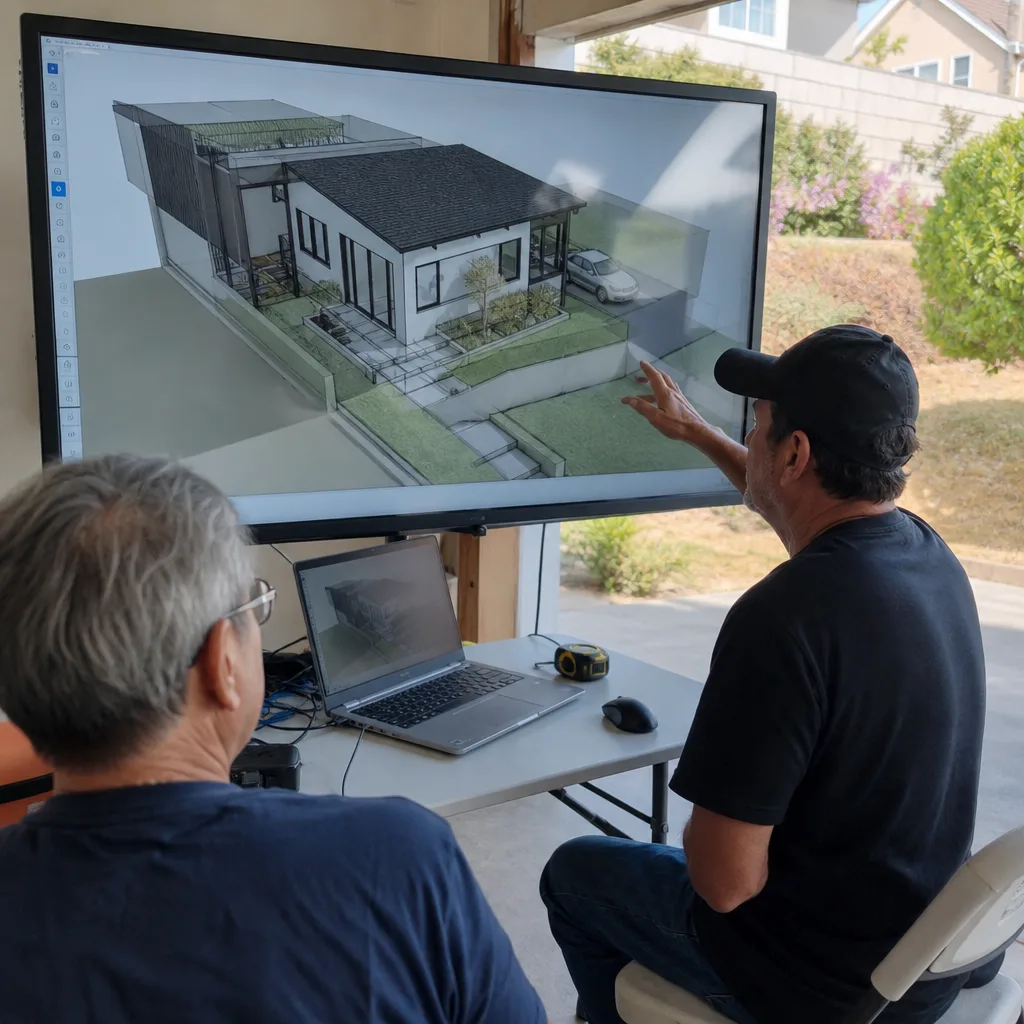
Utility work is the category most underestimated in generic ADU cost guides. In Diamond Bar, three conditions drive variance: electrical service capacity, sewer lateral depth and condition, and gas line routing.
Electrical
Most Diamond Bar homes built 1970-1995 have 100-amp or 125-amp service. An ADU with electric cooking, laundry, and HVAC typically requires 60 amps minimum. If your main panel is full or undersized, the upgrade path runs:
- Subpanel from existing main: $2,500-$4,500 if capacity exists
- Main panel upgrade to 200 amps: $4,500-$8,000, including SCE coordination
- New separate meter and service: $8,000-$15,000, including trenching and conduit
Southern California Edison’s queue for service upgrades in Diamond Bar currently runs 6-10 weeks. We coordinate this timeline with the construction schedule so drywall isn’t waiting on the utility.
Sewer
Diamond Bar’s sewer laterals are concrete or vitrified clay in most pre-1990 neighborhoods. If the lateral is cracked, offset, or insufficient slope, LA County Sanitation requires replacement before ADU connection. Trenching a new lateral runs $8,000-$18,000 depending on length, depth, and surface restoration (driveway, concrete patio, or landscaping). We’ve handled projects where the lateral ran 80 feet to the street at 8-foot depth, requiring shoring and dewatering. That was a $22,000 line item.
Water
Water meter sizing is usually adequate for ADU addition. The cost trigger is the service line from meter to ADU: $3,000-$7,000 for trenching, copper or PEX installation, and backflow prevention if required.
Gas
Gas line extension is where Diamond Bar’s hillside lots get expensive. If the ADU sits above the main house on a slope, the line must be trenched with proper bedding and slope, or run overhead with exposed conduit (rarely approved aesthetically). Typical range: $4,000-$12,000. Many of our clients opt for all-electric ADUs to eliminate this variable, which also exempts them from gas line pressure testing and earthquake valve requirements.
Separate Meter Considerations
A separate electrical meter allows the ADU to be metered independently, useful for rental scenarios. SCE charges a new service establishment fee of approximately $1,500-$3,000 plus infrastructure contributions if the transformer needs upgrade. We evaluate this during initial utility research and document our findings in the written scope.
Finish Level Delta
The difference between builder-standard and mid-market finishes is not subjective - it’s line-item documented. For a 600-square-foot ADU in Diamond Bar, here’s the spread:
| Category | Builder-Standard | Mid-Market | Delta |
|---|---|---|---|
| Flooring (LVP or basic tile) | $3,500-$4,500 | $6,000-$8,500 | +$2,500-$4,000 |
| Cabinetry (stock boxes) | $4,000-$5,500 | $8,000-$12,000 | +$4,000-$6,500 |
| Countertops (laminate/quartz) | $1,200-$1,800 | $2,800-$4,500 | +$1,600-$2,700 |
| Fixtures (faucets, lighting, hardware) | $2,000-$2,800 | $4,500-$7,000 | +$2,500-$4,200 |
| Appliances (basic electric package) | $3,500-$4,500 | $6,500-$9,000 | +$3,000-$4,500 |
| Tile work (shower surround) | $2,500-$3,500 | $5,000-$8,000 | +$2,500-$4,500 |
| Total Finish Package | $16,700-$22,600 | $32,800-$49,000 | +$16,100-$26,400 |
We specify James Hardie siding as our standard exterior finish on new detached units. The material cost runs 15-20% above basic vinyl, but the fire rating (crucial in Diamond Bar’s wildland-urban interface zones) and the 30-year warranty justify the delta. In the Rowland Heights-adjacent hills, we’ve had projects where James Hardie was the only siding option the fire marshal would approve without additional ignition-resistant construction.
The finish selection happens in our design phase, with every choice documented in the permit set and the written scope. Under Haven Standard, Clause 5, these selections are locked at contract signing. If a client wants to upgrade mid-project, we price the change as a written amendment - never a verbal “that’ll be a little extra.”
Financing Cost as a Project Line Item
Financing is part of the all-in cost, and each product type demands different documentation from the permit set. Here’s how the options play out for Diamond Bar homeowners in 2026:
Home Equity Line of Credit (HELOC)
Best for: homeowners with significant equity, seeking flexibility. Rates currently 7.5-9.5% variable. The lender typically wants a written construction estimate and permit approval letter. Our written price and permit set satisfy this. No draws, no inspections - you control disbursement. Interest-only periods reduce early payments but extend total cost.
Construction Loan
Best for: homeowners with limited equity or seeking fixed rates. Rates currently 8.5-10.5%, interest-only during construction, converting to amortizing. The lender requires: licensed contractor (verified license number on every page of our documentation), detailed draw schedule tied to inspections, and title updates. Our single-contract model simplifies this - one payee, one schedule, one set of lien releases. Construction loans add 2-3% in origination fees and require 10-20% down.
ADU-Specific Loan Products
California’s CalHFA ADU Grant program has shifted to a revolving loan fund structure in 2025-2026, offering deferred-payment loans up to $40,000 for pre-development costs (design, permits, site prep) in qualifying census tracts. Parts of Diamond Bar qualify based on income metrics. The permit set must be complete before application. We prepare this documentation as part of our standard design phase.
Refinance with Cash-Out
Best for: homeowners with rates above 6% on their primary mortgage. Consolidate and cash out in one transaction. The appraisal must support the post-ADU value, which requires our permit set and construction contract to document the improvement.
Financing cost adds $8,000-$25,000 to the all-in project depending on product, amount, and term. We don’t originate loans, but we provide the documentation package - written scope, permit set, contractor license verification, and draw schedule - that every lender requires.
Common Mistakes to Avoid
- Using a per-square-foot rule from a national website. A $200/sf figure from a national cost estimator ignores Diamond Bar’s hillside lots, LA County’s fee schedule, and SCE’s upgrade queue. We’ve seen homeowners budget $120,000 for a project that costs $220,000 because they used a Sacramento or Phoenix benchmark.
- Assuming the garage conversion is always cheapest. In Diamond Bar’s 1960s-1970s neighborhoods, garages often have 3.5-inch slabs, uninsulated block walls, and low-pitch roofs that can’t accommodate residential insulation. The “conversion” requires foundation replacement, wall rebuild, and roof raise - essentially new construction in an existing footprint.
- Ignoring the school fee. At $4.08/sf, this is modest but non-negotiable. More importantly, it’s due at permit issuance, not at project completion. Cash-flow it into your early project timeline.
- Designing without utility research. We’ve had clients spend $6,000 on architectural drawings only to learn their sewer lateral needs replacement, or their electrical service can’t support the planned load. Our process includes utility research before design finalization.
- Choosing finishes during construction. Last-minute tile selection or appliance swaps delay the schedule and inflate costs. Our permit set includes finish specifications; selections are locked at signing per Haven Standard, Clause 5.
- Not verifying contractor license status. CSLB license lookup takes 60 seconds. Every page of our documentation includes our license number for verification - not just claimed, but verifiable.
- Skipping the soils report on sloped lots. LA County can require this retroactively if grading triggers a geotechnical hold. A $3,500 upfront report prevents a $15,000 foundation redesign mid-project.
When to Call a Professional
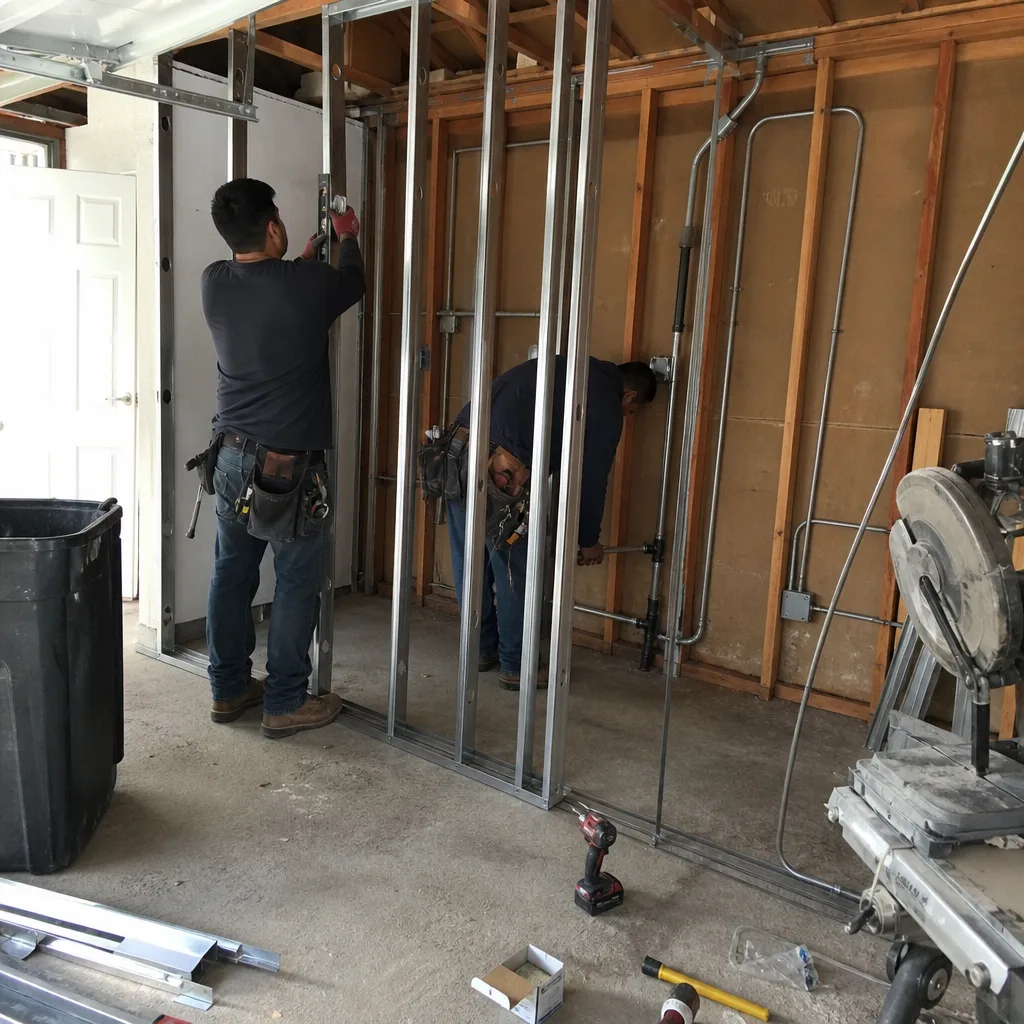
Call a design-build studio when your ADU project involves any of the following: slope over 5%, existing structures with unknown foundation condition, electrical service at 125 amps or below, any gas line work, or a timeline tied to financing draws. These are not homeowner-managed scenarios. The permit set, utility coordination, and inspection sequencing require licensed, documented execution.
Ellery ADU Studio Diamond Bar home offers free estimates in Diamond Bar - call (657) 239-4865. We also provide a Free Second Opinion on any written estimate already in hand, with no obligation to engage our services. A live person answers calls 24/7.
Frequently Asked Questions
A complete ADU in Diamond Bar ranges from $60,000 for a Junior ADU to $380,000 for a new detached unit with hillside sitework and mid-market finishes. Garage conversions typically run $120,000-$185,000. Call (657) 239-4865 for a written, line-item estimate - estimates are free, and the price is locked before work begins.
No. Under Haven Standard, Clause 5 (No Surprises), the scope and price are locked at contract signing. Changes only occur through a written amendment that you approve. We’ve maintained this on 900-plus projects since 2015.
We pull all permits as part of our single-contract service. The permit set is our core product, not an afterthought. We manage LA County plan check, revisions, and inspection scheduling. You receive copies of every permit and approval for your records.
From permit issuance to final inspection: garage conversions 10-14 weeks, attached additions 16-22 weeks, new detached units 20-28 weeks. Prefab and modular options from brands like Plant Prefab or Abodu can reduce the on-site construction period by 30-40%, though total timeline includes the same permit and foundation phases.
Not required, but often advisable for rental scenarios. A separate meter costs $8,000-$15,000 including SCE coordination and trenching. We evaluate your service capacity and rental plans during initial design to recommend the right approach.
Every client receives a written construction contract, detailed scope of work, permit set, contractor license verification, and draw schedule tied to inspection milestones. This package satisfies HELOC, construction loan, and refinance lender requirements. We do not originate loans.
A design-build studio holds single-contract responsibility for drawings, permits, and construction. If the built ADU doesn’t match the permitted drawings, there’s no designer-builder blame gap - we make it right under our 365-Day Done Right Promise. With separate contracts, the homeowner arbitrates disputes and pays for revision cycles. Since 2015, we’ve completed 900-plus ADUs with zero designer-contractor disputes because there is no separate designer or contractor.
The Bottom Line
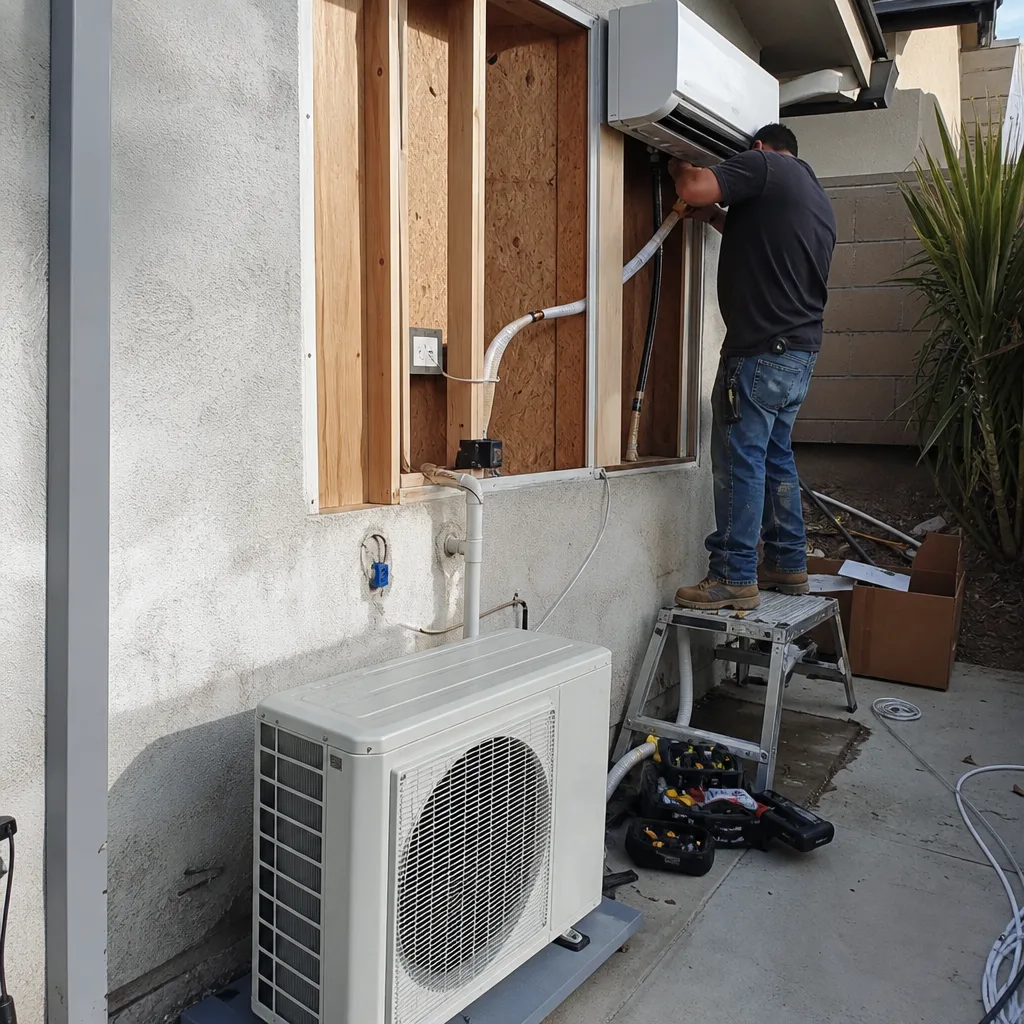
ADU cost in Diamond Bar is not a mystery - it’s six categories with documented ranges, and you’ll find more guides & resources on our blog. Site conditions drive the widest variance, from flat lots at $8,000 to hillside retaining walls at $45,000. Unit type sets your base: $60,000-$95,000 for JADUs, $120,000-$185,000 for garage conversions, $200,000-$310,000 for attached additions, $280,000-$380,000 for new detached. Permit and design fees run $6,000-$15,000 depending on complexity. Utility connections add $8,000-$35,000 for electrical, sewer, and gas. Finish level spans a $16,000-$26,000 delta between builder-standard and mid-market. Financing carries its own cost and documentation requirements.
The number you can defend to a lender comes from a written, line-item quote based on a site-specific evaluation - not a per-square-foot guess from a national website. That’s what we provide at Ellery ADU Studio Diamond Bar, governed by The Haven Standard: written price before work starts, documented photo record on every visit, and a 365-Day Done Right Promise backed in writing.
Call (657) 239-4865 to schedule your free estimate. A live person answers 24/7.
Written by Nadia Ellery, Owner at Ellery ADU Studio Diamond Bar, serving Diamond Bar since 2015.