
Last updated September 25, 2026
Seasonal ADU Care for Diamond Bar: Year-Round Homeowner’s Guide
Most ADU maintenance guides treat Southern California as one uniform climate. They’re wrong. Diamond Bar sits at the intersection of three distinct stressors: the South Coast Air Quality Management District’s strict emissions rules, wildfire smoke infiltration from adjacent high fire hazard severity zones, and hillside drainage patterns that accelerate during winter storms. An ADU here faces UV exposure comparable to Riverside County, oak pollen loads that rival the San Gabriel Valley, and winter rainfall that pools precisely where slope geometry directs it. This guide assigns specific tasks to specific months, calibrated to Diamond Bar’s actual conditions, and pairs well with our ADU Design & Permitting Maintenance Checklist for Diamond Bar Homeowners for year-round coverage.
Quick Answer
ADU maintenance in Diamond Bar follows a twelve-month calendar keyed to three local stressors: wildfire smoke season (June-September), first-rain drainage events (October-November), and hillside moisture penetration (December-February). Critical tasks include quarterly HVAC filter changes during smoke events, pre-winter gutter clearing for oak debris, and annual foundation inspection after rain. Document everything - LA County rental habitability requirements demand it.
Table of Contents
- June-September: Smoke Season and UV Stress
- October-November: Pre-Rain Preparation and Fire Clearance
- December-February: Drainage Monitoring and Moisture Control
- March-May: Post-Rain Recovery and Resealing
- Annual Documentation for LA County Rental Compliance
- Special Considerations for Prefab and Modular ADUs
- Common Mistakes to Avoid
- When to Call a Professional
- Frequently Asked Questions
June-September: Smoke Season and UV Stress
Diamond Bar’s position downwind of the Angeles National Forest and Cleveland National Forest means wildfire smoke arrives before official evacuation orders do. The South Coast AQMD issues frequent alerts from July through October; your ADU’s HVAC system works harder, and its filters saturate faster than equipment manuals suggest.
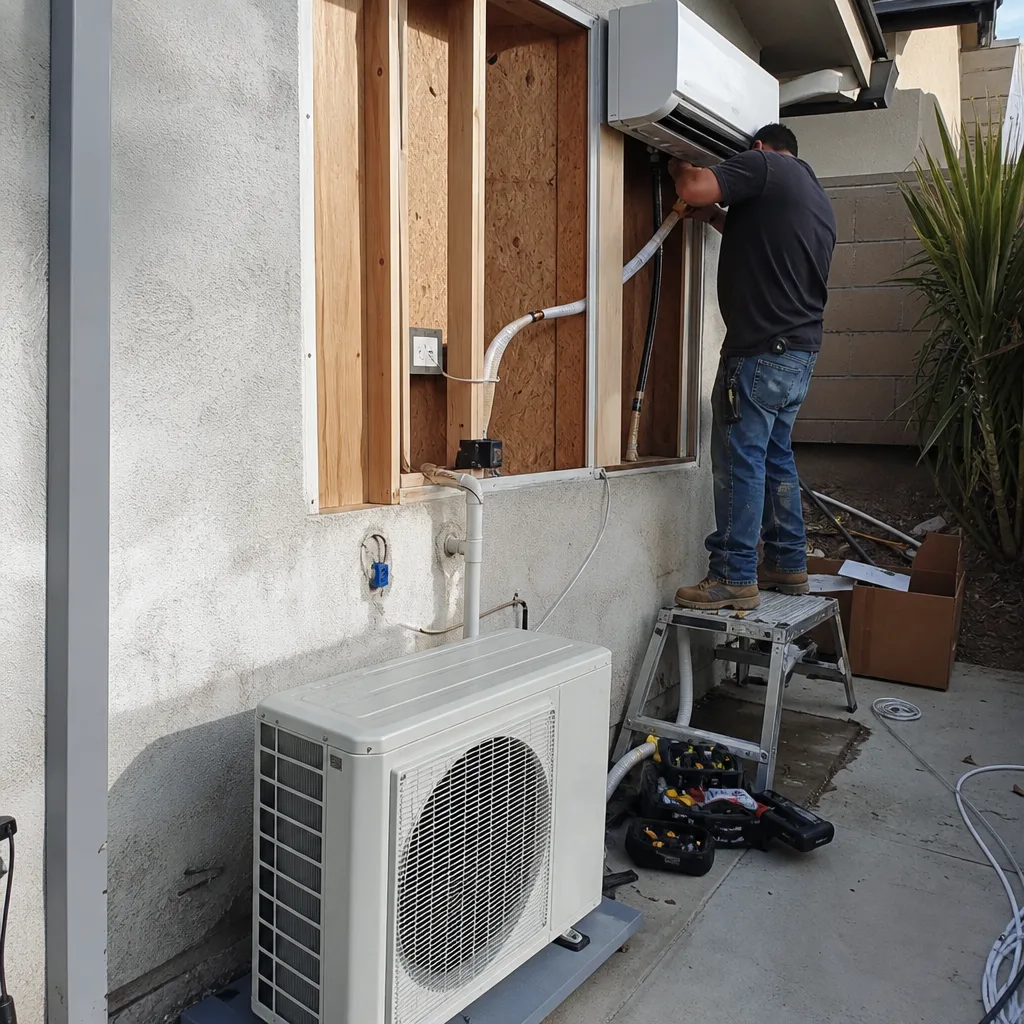
HVAC filter replacement frequency: Standard 1-inch pleated filters rated MERV 8-11 should be inspected monthly and replaced every 45-60 days during active smoke events. For ADUs with mini-split systems - common in garage conversion ADUs in Diamond Bar - the cassette or wall-mounted unit’s filter requires the same accelerated schedule. We’ve found filters in Diamond Bar ADUs near Grand Avenue running at 80% capacity within six weeks of a major fire event. The restriction reduces airflow, strains the compressor, and recirculates particulates the tenant assumes are being captured.
Document each filter change with a dated photo. Under The Haven Standard, Clause 3 (Documented Record), our clients receive this evidence automatically; owner-managed ADUs should replicate the practice.
Exterior paint and caulk inspection: The Santa Ana wind season begins as early as September. Before it arrives, inspect:
- All horizontal caulk joints at window sills, door thresholds, and trim-board intersections. UV degradation in Diamond Bar’s 280+ annual days of sunshine causes acrylic latex caulk to shrink and crack within 18-24 months.
- South- and west-facing wall surfaces for chalking - the powdery residue indicating binder breakdown in the paint film.
- Deck or patio surfaces for UV degradation. Composite decking (Trex, TimberTech) fades; wood decking checks and splinters. In our experience, ADUs with south-facing decks in Diamond Bar’s Golden Springs neighborhood require board replacement or resurfacing at year 8-10, versus year 12 in less exposed inland locations.
Roof membrane inspection: For flat or low-slope roofs common on modern detached ADUs, inspect the TPO or modified bitumen membrane for seam separation and puncture. UV exposure accelerates plasticizer migration in single-ply membranes. A 10-minute walkover in August prevents a January leak when the first rain finds the compromised seam.
October-November: Pre-Rain Preparation and Fire Clearance
Diamond Bar’s first significant rain typically arrives in late October or early November. The city’s oak tree density - particularly in the hillside neighborhoods north of Pathfinder Road - generates debris loads that overwhelm standard gutter systems.
Gutter and downspout clearing: Clear gutters twice: once after the last oak leaf drop (usually mid-November), and once in late September to remove summer dust accumulation that forms a paste when wetted. Downspouts should discharge at least 6 feet from the foundation or into a drainage swale. Many Diamond Bar ADUs, especially new detached ADUs in Diamond Bar built on sloped lots, rely on surface grading rather than underground drains. Verify the discharge point hasn’t been buried by landscaping or tenant storage.
Grading and drainage swale inspection: Before first rain, walk the lot during a hose test or, ideally, a light early storm. Observe:
- Water flow patterns across the ADU’s setback area. Positive drainage - water moving away from the structure - is typically a permit condition in Diamond Bar’s hillside zones.
- Swale depth and vegetation. A swale clogged with Bermuda grass or ice plant loses capacity. The swale should carry a 10-year storm without overtopping.
- Retaining wall weep holes. Blocked weep holes hydrostatically load the wall; in 2019, we documented a Diamond Bar ADU retaining wall with 18 inches of saturated backfill after a single November storm because landscape fabric had been installed against the wall face.
Fire-clearance vegetation management: For detached ADUs in Diamond Bar’s Very High Fire Hazard Severity Zone (portions of the northern and eastern city limits), California Public Resources Code 4291 requires 100 feet of defensible space. The October-November window is the last practical opportunity before winter growth dormancy. Specific tasks:
- Remove dead or dying vegetation within 30 feet of the ADU structure.
- Maintain vertical clearance of 6 feet from ground to lowest tree branch within 10 feet of the structure.
- Clear leaf litter and debris from roofs, gutters, and under-deck areas.
- Relocate firewood, propane tanks, and combustible storage to outside the 30-foot zone.
LA County Fire Department conducts defensible space inspections; non-compliance can affect insurance coverage. Document your clearance work with dated photos.
December-February: Drainage Monitoring and Moisture Control
Diamond Bar’s winter rainfall averages 14-18 inches, concentrated in December through February. The city’s hillside topography means water moves fast and concentrates where slopes converge. This is when permit-mandated drainage systems - designed under ADU Permits, Codes & Inspections in CA: What You Need to Know - prove their value or reveal their inadequacy.
Hillside drainage monitoring after rain events: After each storm exceeding 0.5 inches in 24 hours, inspect:
- Surface flow paths across the ADU’s immediate vicinity. New erosion channels indicate grading failure.
- Retaining wall drainage outlets. Water should emerge clear; muddy discharge indicates soil migration behind the wall.
- Foundation perimeter for ponding. Even 30 minutes of standing water against a stem wall can drive moisture through hairline cracks.
In the Countrywood and Oak Tree Downs neighborhoods, we’ve observed seasonal springs activate in January that are completely dry in July. An ADU foundation designed for summer conditions may experience hydrostatic pressure in winter that wasn’t modeled.
Crawl space or subfloor moisture check: For ADUs with raised floors (common in Tuff Shed and some Plant Prefab installations), the crawl space requires winter inspection. Relative humidity above 70% supports mold growth on joist bottoms and subfloor sheathing. Check:
- Vapor barrier integrity. The 6-mil polyethylene sheet should cover 100% of the soil surface with 12-inch overlaps, taped at seams.
- Foundation vent operation. Automated temperature-humidity vents should open when exterior relative humidity drops below interior levels; manual vents should be closed during rain events and opened during dry spells.
- Subfloor sheathing for discoloration or softness. Probe with a screwdriver at joist intersections - the first point of moisture accumulation.
Sump or drainage system test: If your ADU permit included a sump pump or French drain as a condition of approval (common in Diamond Bar’s hillside zones with positive drainage requirements), test the system before the heaviest rain month. Pour 5 gallons into the sump pit; the pump should activate within 30 seconds and discharge to the designated point. For gravity drains, verify flow with a hose test. A failed sump pump discovered in February is a foundation repair by March.
March-May: Post-Rain Recovery and Resealing
The transition period after winter rains and before summer heat is Diamond Bar’s optimal window for structural and envelope repairs. Materials cure properly; access is dry; contractors’ schedules open before the summer rush.
Post-rain foundation and retaining wall inspection: Walk the ADU perimeter after the soil has drained but before summer desiccation cracks appear. Look for:
- Foundation settlement indicators: sticking doors, cracked drywall at window corners, separated trim joints.
- Retaining wall tilt or bulge. Measure with a level or string line; any deviation from plumb exceeding 1 inch in 4 feet requires engineered evaluation.
- Exposed rebar or spalling concrete. Winter moisture accelerates corrosion; spring is the repair window before expansion cracks propagate.
We’ve documented foundation movement in Diamond Bar ADUs built on cut-and-fill lots where the geotechnical report specified overexcavation and recompaction that wasn’t fully executed. Spring reveals what winter precipitated.
Window and door resealing: The wet-dry cycling of Diamond Bar’s winter causes sealant joints to fatigue. Inspect and replace as needed:
- Exterior door thresholds and weatherstripping. Compression-set weatherstripping no longer seals; replace when daylight is visible under a closed door.
- Window perimeter sealant. Remove failed silicone or polyurethane and reapply with backer rod for proper joint geometry.
- Sliding door track drains. Clear weep holes blocked by debris; water trapped in the track migrates to the subfloor.
Utility meter verification: For separately metered ADUs - increasingly common for rental units in Diamond Bar - verify both electric and gas meter readings against tenant usage. The spring shoulder season, when neither heating nor cooling dominates, establishes the baseline “vampire” load. Anomalous readings indicate HVAC malfunction, water heater sediment, or potential submeter tampering. Document the baseline; it supports future habitability disputes.
Annual Documentation for LA County Rental Compliance
An ADU used as a rental in Diamond Bar triggers LA County’s habitability requirements, enforced through the Department of Consumer and Business Affairs and, for unincorporated areas, the LA County Code Enforcement division. Diamond Bar incorporated areas follow the city’s rental housing code, which references state standards.
Required documentation:
- Habitability inspection records: Annual inspection by a qualified professional documenting structural safety, weatherproofing, plumbing, heating, and electrical systems. The inspection report should reference the specific code edition in effect at construction.
- Smoke and CO detector compliance: California Health and Safety Code 17926 requires smoke detectors in every sleeping room, outside each sleeping area, and on every level. CO detectors are required for ADUs with fuel-burning appliances or attached garages. Test annually; replace at manufacturer expiration (typically 10 years for smoke, 7 for CO). Document test dates and battery replacement.
- Lead-based paint disclosure: For ADUs built before 1978, federal law requires disclosure to tenants. Maintain signed acknowledgments.
- Mold assessment: If winter moisture monitoring revealed elevated humidity, obtain a professional assessment. LA County considers visible mold a substandard housing condition; proactive documentation protects the landlord.
- Permit compliance verification: Confirm the ADU’s Certificate of Occupancy matches current use. Unpermitted bedroom additions, kitchen modifications, or occupancy changes can invalidate insurance and trigger code enforcement.
Under The Haven Standard, Clause 7 (Transferable Documentation), our clients receive a complete permit set, inspection record, and as-built photo archive at project completion. This package satisfies most habitability documentation requirements without additional expense.
Special Considerations for Prefab and Modular ADUs
Ellery ADU Studio specifies and coordinates prefab and modular systems from Plant Prefab, Tuff Shed, James Hardie, Abodu, and other manufacturers within our single-contract design-build model. These systems have maintenance profiles that differ from site-built construction.
Plant Prefab: The steel moment frame and panelized envelope require annual inspection of the structural bolted connections, particularly if the ADU was crane-set on a sloped Diamond Bar lot. The factory-applied weather barrier should not be penetrated; any modifications require manufacturer-approved detailing to maintain the 10-year envelope warranty.
Tuff Shed: The proprietary steel-reinforced door system and engineered wood siding require specific resealing at panel joints. The manufacturer’s maintenance manual specifies a 2-year re-caulk cycle; in Diamond Bar’s UV exposure, we’ve found annual inspection prudent.
James Hardie: Fiber cement siding is inert to UV and moisture but requires proper clearance from grade (minimum 6 inches) and from roof surfaces (minimum 1 inch). Winter splashback from unguttered eaves stains and degrades the finish; spring inspection catches this before warranty claims are complicated by deferred maintenance.
Abodu: The unit’s integrated MEP (mechanical, electrical, plumbing) systems arrive factory-tested but require field verification of utility connections. The annual maintenance checklist includes water heater anode rod inspection - often overlooked because the compact utility core conceals the access point.
For any prefab or modular ADU, maintain the manufacturer’s maintenance log. Warranty claims require evidence of scheduled care; the “set it and forget it” assumption common among ADU owners voids coverage.
Common Mistakes to Avoid
- Using a generic Southern California maintenance calendar. Diamond Bar’s oak canopy, hillside drainage, and smoke exposure create a distinct profile. A San Diego or Orange County checklist misses critical local tasks.
- Deferring gutter maintenance until visible overflow. By the time water cascades over gutter rims, the fascia board is saturated and the foundation splash zone is compromised. In Diamond Bar’s oak-dense neighborhoods, gutters require proactive clearing.
- Ignoring the ADU’s separate utility infrastructure. Many owners monitor the primary residence’s systems while the ADU’s water heater, HVAC, and electrical panel operate unattended until failure. Separately metered units need separate maintenance schedules.
- Performing fire clearance once and assuming compliance. Vegetation regrowth in Diamond Bar’s mild winters can reestablish non-compliant conditions within a single season. LA County Fire may reinspect after complaint or incident.
- Failing to document maintenance activities. In a habitability dispute or insurance claim, the owner who cannot produce dated evidence of care is presumed negligent. Photos, receipts, and inspection reports belong in a dedicated file.
- Modifying prefab systems without manufacturer consultation. Adding a window, penetrating the envelope for a satellite dish, or replacing siding with non-matching materials voids warranties and complicates resale.
- Neglecting the drainage swale because “it looks fine.” A swale’s capacity is invisible until it’s exceeded. Annual verification with a hose test confirms function before the storm that exceeds design.
When to Call a Professional
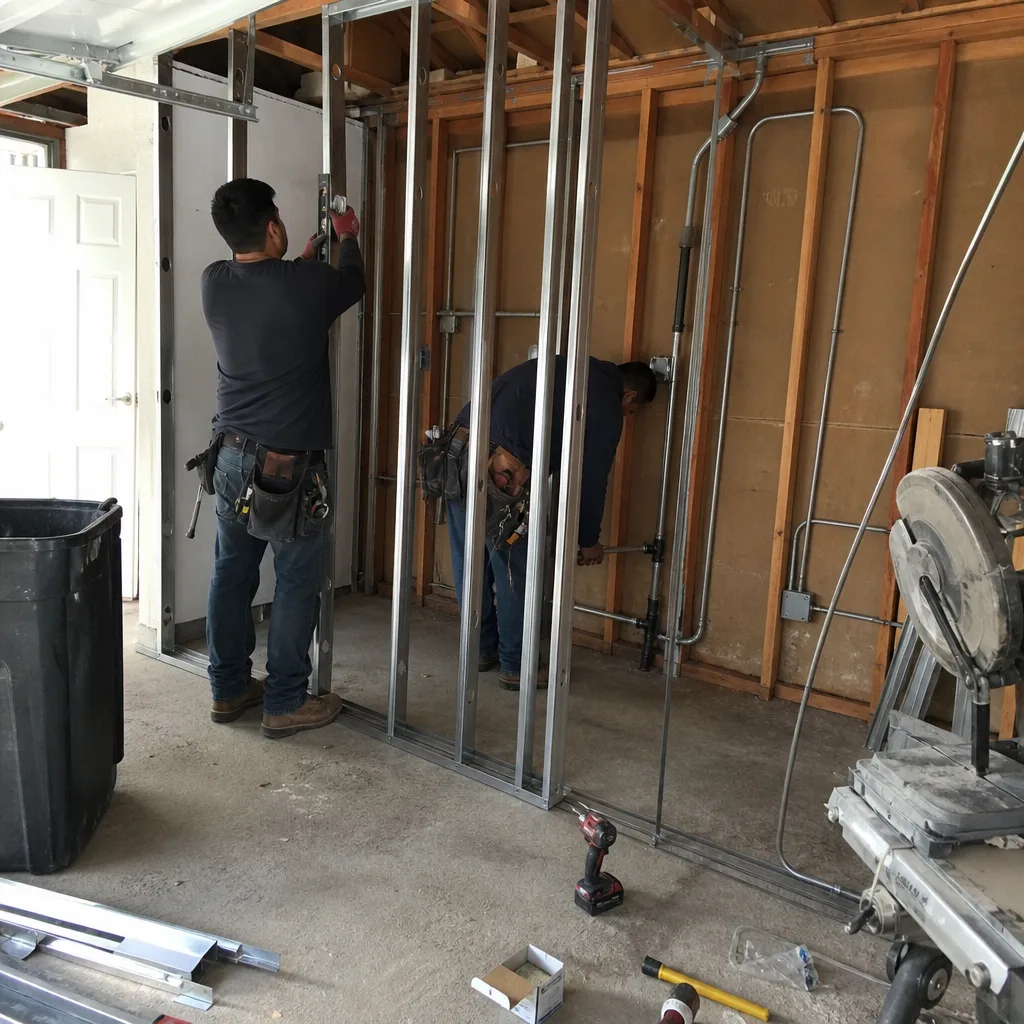
Some conditions exceed owner capability and risk permit compliance or personal safety. Call a licensed professional for: foundation movement or retaining wall distress; electrical panel work or subpanel upgrades; gas line modification or appliance replacement; roof membrane repair or replacement; and mold assessment or remediation beyond superficial surface cleaning.
For ADU-specific concerns - permit compliance verification, as-built documentation gaps, or warranty claim support - Ellery ADU Studio Diamond Bar offers free estimates in Diamond Bar. We’ve designed, permitted, and built over 900 ADUs since 2015; we know what the permit set specified and what the inspector signed off on. Call (657) 239-4865.
Frequently Asked Questions
For a detailed cost framework, see our ADU Cost Breakdown: The Diamond Bar Homeowner’s Reference for 2026. Annual maintenance for a Diamond Bar ADU typically runs $800-$2,400, depending on size, age, and whether the unit is site-built or prefab. This covers filter replacements, gutter clearing, sealant inspection, and professional habitability documentation. Deferred maintenance compounds costs; a $200 spring caulking job becomes a $3,000 window replacement when water intrusion rots the frame. Call (657) 239-4865 for an exact assessment - estimates are free.
Diamond Bar does not mandate a city-specific annual ADU inspection, but LA County habitability standards apply to all rental units, and insurance carriers increasingly require documented evidence of maintenance. The practical standard is an annual professional inspection with written report, plus functioning smoke/CO detectors verified by test. We provide documented photo records on every visit as standard practice under The Haven Standard.
During active South Coast AQMD smoke alerts, inspect filters every 30 days and replace at 45-60 days regardless of visual appearance. Smoke particulates are smaller and more numerous than standard dust loads; the filter media saturates before it looks dirty. Mini-split cassette filters require the same accelerated schedule.
ADUs within Very High Fire Hazard Severity Zones - portions of northern and eastern Diamond Bar - require 100 feet of defensible space per California Public Resources Code 4291. This includes 30 feet of lean, clean, and green zone adjacent to the structure, and 70 feet of reduced fuel zone. The requirement is the owner’s responsibility, not the tenant’s, unless explicitly assigned in lease.
Under The Haven Standard, Clause 1 (Written Price Before Any Work Starts), every project is quoted with a written price before any work begins. The scope is locked at signing; no door-side upsells, no scope creep. This applies to maintenance packages, repair work, and full design-build projects equally.
Repairs that match the original permitted design typically do not require new permits. Modifications to the drainage path, wall height, or structural system do. In Diamond Bar’s hillside zones, geotechnical review is often a permit condition. We verify permit status before work begins and pull new permits when required - included in our single-contract service.
The Bottom Line
Diamond Bar’s ADU maintenance calendar is dictated by three forces no generic guide addresses: wildfire smoke infiltration from adjacent federal lands, oak-canopy debris loads that overwhelm standard drainage, and hillside hydrology that concentrates winter rainfall against foundations. Assign tasks to specific months, document every action, and verify prefab-specific requirements against manufacturer warranties. The cost of scheduled maintenance is predictable; the cost of deferred maintenance is not. For ADU owners who want the permit set, the inspection record, and the warranty documentation in one place, ADU Design & Permitting in Diamond Bar is where our process starts.
Written by Nadia Ellery, Owner at Ellery ADU Studio Diamond Bar, serving Diamond Bar since 2015. Explore more guides & resources on ADU planning and care.